


See more of our trusted, verified journalism when you search on Google.
Kathmandu, Nepal — At least 19 people were killed and dozens more injured as violent protests swept across the country after the government’s decision to ban major social media platforms. The Nepal Protest, largely driven by young people and dubbed the “Gen Z uprising,” erupted in multiple cities, reflecting deep frustration over restrictions on free expression and mounting anger at corruption scandals involving political elites.
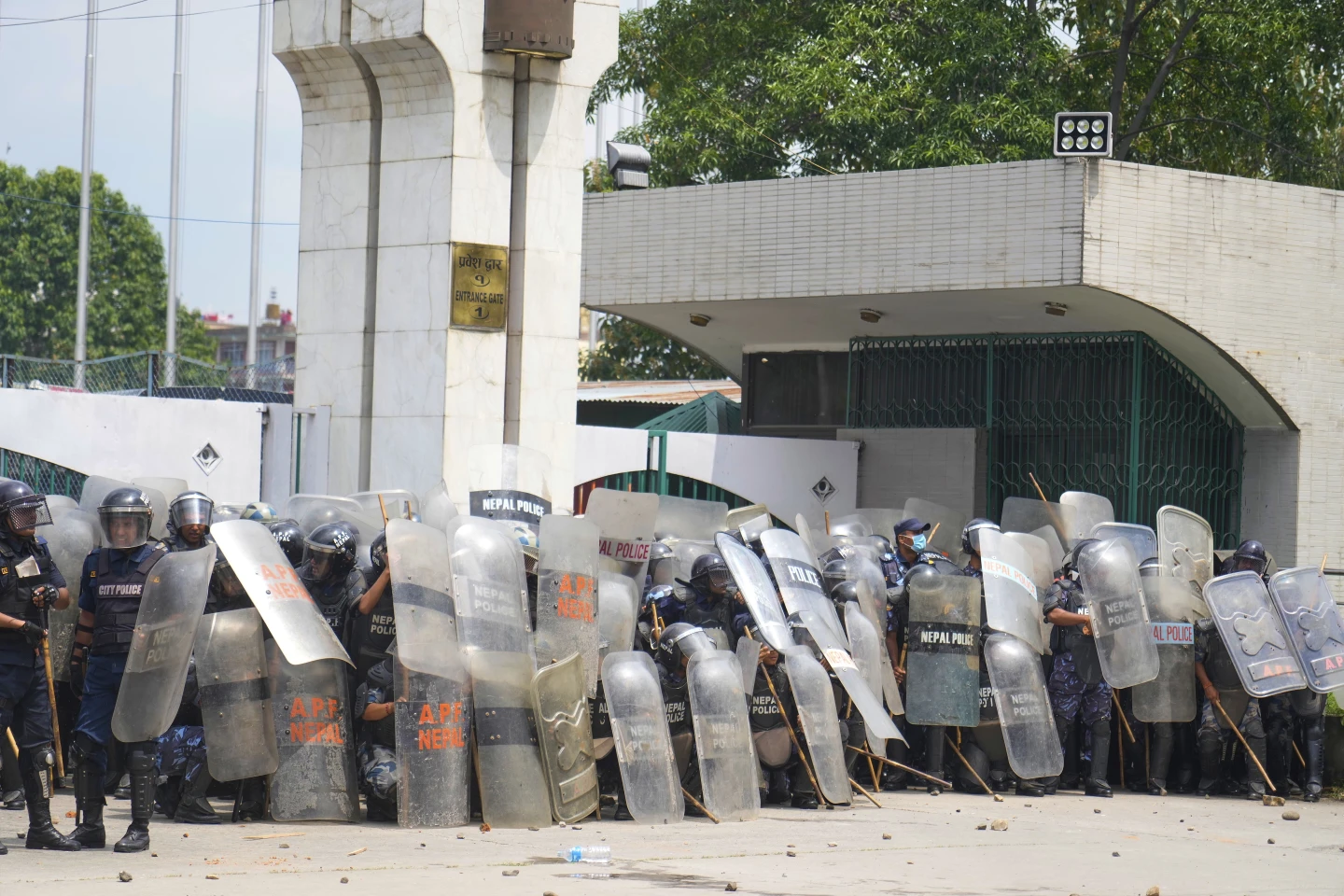
Police confirmed that security forces opened fire in several locations after the Nepal Protest turned chaotic, with crowds clashing with officers, setting vehicles ablaze, and surrounding government buildings. Human rights organizations have condemned the use of lethal force, warning that the crackdown could further inflame unrest in the Himalayan nation.
According to a local official, some of the Nepal Protest the majority of whom were young broke through a barricade to enter the parliament complex in Kathmandu, burning an ambulance and throwing objects at the riot police lines that were securing the building.
Also Read: Russia Reacts to Trump’s Strike on Venezuela’s Tren de Aragua Gang
The ban, announced earlier this month, targeted apps such as TikTok, Facebook, and Instagram, with officials claiming the move was aimed at curbing misinformation and online abuse. But critics argue it was an attempt to silence dissent, particularly among young Nepalis who increasingly use social media to voice political concerns. “This is not about misinformation. It’s about silencing our generation,” said a student leader at a rally in Kathmandu.
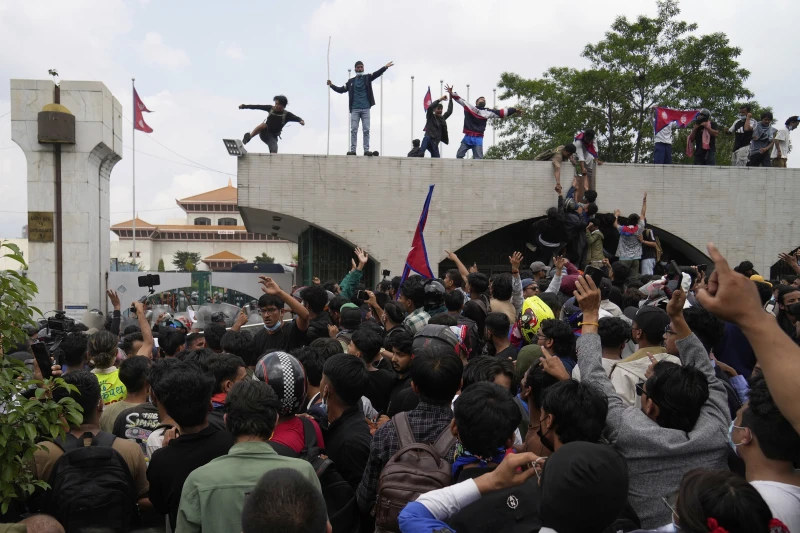
The anger has been compounded by long-standing grievances over corruption, unemployment, and poor governance. Many demonstrators say the ban was simply the tipping point. “The government wants us to stay quiet while politicians steal our future,” one protester told local media.
Another government minister, who asked to remain anonymous because he was not authorized to speak to the media, told Reuters that Home (Interior) Minister Ramesh Lekhak resigned from the government after accepting “moral responsibility” for the violence associated with the Nepal Protest.
Prime Minister K.P. Sharma Oli responded by calling an emergency cabinet meeting to address the escalating unrest. Thousands of young people, many wearing school or college uniforms, poured into the streets earlier Monday, calling for accountability, an end to corruption, and the immediate lifting of the social media ban, which sparked the Nepal Protest.
International reactions have been swift. Amnesty International urged Nepal’s government to immediately lift the ban and investigate the killings. The United Nations called for restraint, emphasizing that freedom of expression is a fundamental right that must be protected.
Prime Minister Pushpa Kamal Dahal’s administration has defended the policy, insisting it was necessary to protect “social harmony and security.” However, analysts warn that the spiraling violence risks destabilizing the fragile political climate in Nepal, where democratic institutions remain under pressure.
Curfews were enforced in a number of districts as the evening approached, and there was a significant presence of security on the streets. However, the crisis doesn’t appear to be abating, with resentment still brewing and the opposition vowing to launch nationwide strikes. The youth of Nepal claim that the battle is just getting started.
See more of our trusted, verified journalism when you search on Google.