


See more of our trusted, verified journalism when you search on Google.
Ukrainian President Volodymyr Zelenskyy is set to meet U.S. President Donald Trump in Florida on December 28 in what officials are calling one of the most Zelenskyy Trump consequential diplomatic engagements of the year. The high-profile talks come amid a renewed international push to end the war in Ukraine and have already sparked cautious optimism among global leaders and financial markets.
The Zelenskyy Trump meeting is expected to take place at Trump’s Mar‑a‑Lago residence and will focus on a developing peace framework that both sides have been quietly shaping with European partners. Zelenskyy has indicated that a multi‑point peace proposal is nearing completion and that direct Zelenskyy–Trump talks are necessary to resolve the final, most sensitive issues.
At the top of the agenda are security guarantees for Ukraine a long‑standing demand from Kyiv to ensure that any ceasefire or settlement cannot be easily violated. Zelenskyy is also expected to raise reconstruction funding, long‑term military cooperation, and economic recovery support, as Ukraine continues to repair critical infrastructure damaged during years of conflict.
Also Read: Donald Trump Signs Order to End Tariffs on Coffee, Beef & Tropical Fruit Amid Consumer Pressure
While Maria Zakharova, Russia’s Foreign Ministry spokeswoman, mentioned Thursday that peace talks are moving “slow but steady,” Moscow hasn’t given any hint it’s willing to pull back from the land it seized.
Territorial questions are also likely to be discussed during the Zelenskyy Trump meeting, particularly concerning eastern regions and strategic energy facilities. These issues remain the most complex obstacles in negotiations and will require high‑level political decisions rather than routine diplomatic bargaining.
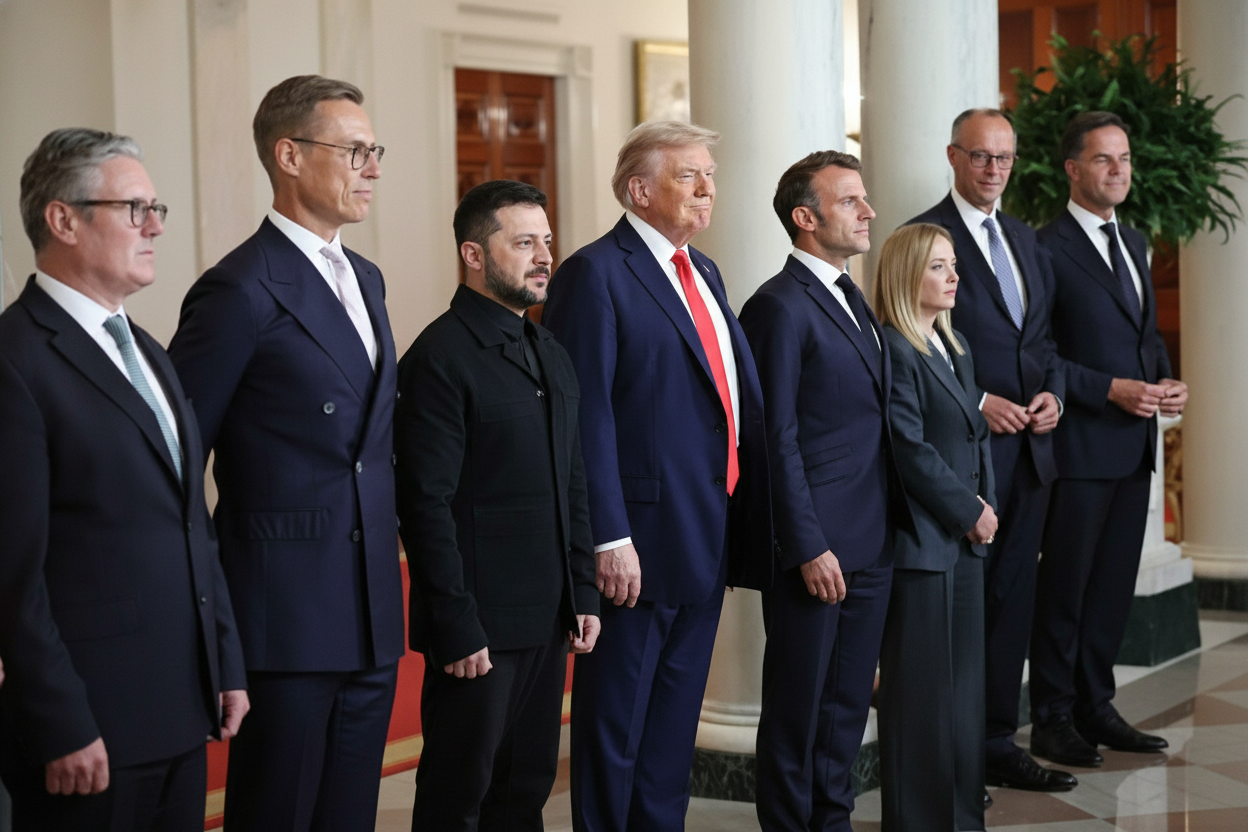
The Zelenskyy Trump meeting, scheduled for December 28 in Florida, comes at a moment when the United States is intensifying efforts to inject fresh momentum into peace talks before the new year. Trump has publicly stated that he intends to personally review and approve any final agreement, effectively placing himself at the center of the negotiation process.
European leaders are monitoring the talks closely and are expected to play supporting roles, either directly or through parallel diplomatic channels. Analysts believe that strong U.S.–Ukraine alignment could significantly increase pressure on Moscow to engage more constructively.
Russia has reacted cautiously to the developing peace framework, which is seen as an updated version of an earlier 28-point document agreed weeks ago between U.S. envoys and Russian officials and widely viewed as skewed toward Kremlin demands.
During the Zelenskyy Trump meeting discussions, Ukraine has pushed for firm security guarantees modeled on NATO’s Article 5 mutual-defense pledge, though it remains unclear whether Moscow would accept such terms.
During the Zelenskyy–Trump talks, Zelenskyy has indicated that Ukraine could consider pulling back “heavy forces” from areas of Donbas it still controls — but only if Russia takes matching steps under a US‑backed plan to establish a “free economic zone” in the region.
Even so, it remains highly uncertain whether Moscow would agree to a demilitarized buffer zone or any meaningful troop withdrawal, while other major sticking points persist, including control of the Zaporizhian nuclear plant, which Kyiv believes should be jointly managed by the US and Ukraine.
On Friday, the Kremlin said Putin’s top foreign policy aide, Yuri Ushakov, had held a call with senior US administration officials after Moscow received an updated American proposal outlining possible ceasefire terms, security arrangements and economic incentives.
While Russian officials acknowledged the discussions as “constructive,” they stressed that no firm commitments had been made and there were still no clear signs that a breakthrough had been reached.
For Ukraine, the stakes in the Zelenskyy Trump talks could not be higher. A successful outcome would not only reduce military tensions but also unlock large‑scale international investment from Western governments and multilateral lenders for rebuilding cities, restoring energy networks, clearing mines, and stabilizing the economy potentially opening the door to fast‑tracked EU funding and new IMF‑backed support packages.
As Zelenskyy prepares to travel to Florida, the world is watching to see whether the Zelenskyy Trump meeting can deliver tangible progress toward a durable peace and possibly mark the beginning of the end of one of the most disruptive conflicts
See more of our trusted, verified journalism when you search on Google.