

See more of our trusted, verified journalism when you search on Google.
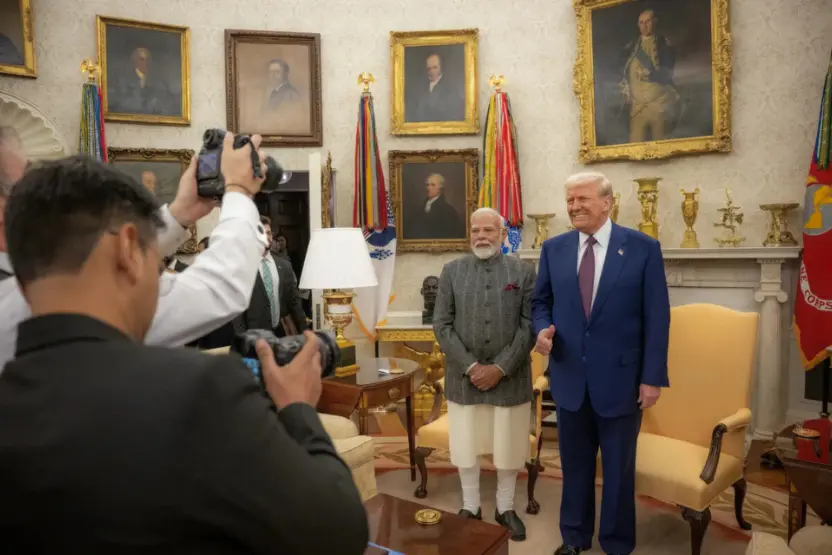
In a striking display of diplomacy and pragmatism, U.S. President Donald Trump and Indian Prime Minister Narendra Modi struck (Trump and Modi) a conciliatory note this week, signaling renewed optimism for trade ties between the world’s largest and oldest democracies.
After months of tension marked by tariff disputes and sharp rhetoric, the two leaders projected a spirit of cooperation, underlining the importance of the U.S India relationship not just for economic prosperity but also for strategic stability in Asia. This moment underscores how the Trump and Modi partnership is increasingly seen as a pivotal factor in shaping global trade and regional security.
The reversal follows a string of conflicting statements from Washington, in which India has been criticized for its defense purchases from Russia and protectionist policies while also being hailed as an important partner. Trump’s earlier remarks, which were occasionally direct and even derogatory, raised questions about the direction of the two countries’ relationship. However, in their most recent conversation, both parties emphasized respect for one another, shared values, and a forward-looking agenda.
In recent months, the U.S.-India relationship has fluctuated between cooperation and tension. Due to New Delhi’s purchases of Russian oil, the United States levied an additional 25% tariff on Indian imports in August, bringing the total duties to as much as 50%. In addition to bringing attention to the partnership’s tensions, this disagreement paved the way for the Trump and Modi administrations to reframe the discussion and place an emphasis on working together despite differences.
At the heart of the discussion were trade negotiations, long stalled over market access, tariffs, and agricultural exports. Sources close to the talks suggest that while a comprehensive free trade agreement remains distant, both governments are working toward a “mini deal” that would address priority concerns such as reduced tariffs on certain goods, improved access for U.S. agricultural products, and better opportunities for Indian technology and pharmaceutical companies. This renewed effort by Trump and Modi is seen as a critical step forward, and such an agreement could pave the way for broader negotiations down the line.
The revival of optimism is significant for both economies. For India, deeper access to American markets could boost exports at a time when its economy is grappling with slower growth and global headwinds. For the U.S., India represents a massive and growing consumer base as well as a counterweight to China’s influence in the Indo-Pacific region. Analysts note that the optics of Trump and Modi standing together after months of friction also send a strong geopolitical message. Yet this positive mood has not erased earlier frictions.
This move did not go down well with Trump, who labeled trade ties with the country “a totally one sided disaster!” He later added in a Truth Social post that India had offered to cut tariffs to zero, but it was “getting late,” stressing that such concessions should have been made years ago. These remarks underline how the Trump and Modi relationship continues to blend optimism with tension, reflecting both the promise and the pressure of the partnership.
Beyond economics, the leaders touched on defense and strategic cooperation, reaffirming joint commitments under the Indo-Pacific framework. Both countries are keen to deepen security ties, particularly in light of China’s assertiveness and regional instability. The defense partnership, already bolstered by arms deals and joint exercises, is expected to grow further in parallel with trade discussions.
Still, challenges remain. Agricultural subsidies, e-commerce regulations, and digital data policies continue to be thorny issues. Moreover, India’s balancing act between its longstanding ties with Russia and its expanding partnership with the U.S. will test the resilience of the relationship. The two leaders Trump and Modi on Tuesday expressed hopes of successful trade negotiations, even as reports emerged of Trump demanding that the EU impose punitive tariffs on India and China during a meeting with EU officials.
Observers caution that while rhetoric has softened, translating goodwill into tangible outcomes will require sustained effort from negotiators on both sides. For now, the Trump and Modi dynamic reflects both opportunity and tension in this evolving partnership.
Yet the symbolism of this moment cannot be ignored. From Trump’s earlier jibes about India’s economic policies to calling Modi a “dear friend” in recent remarks, the shift highlights the unpredictable but resilient nature of U.S. India ties. Both leaders seem to recognize that despite differences, their countries share a larger strategic destiny—one that benefits from cooperation rather than confrontation.
See more of our trusted, verified journalism when you search on Google.