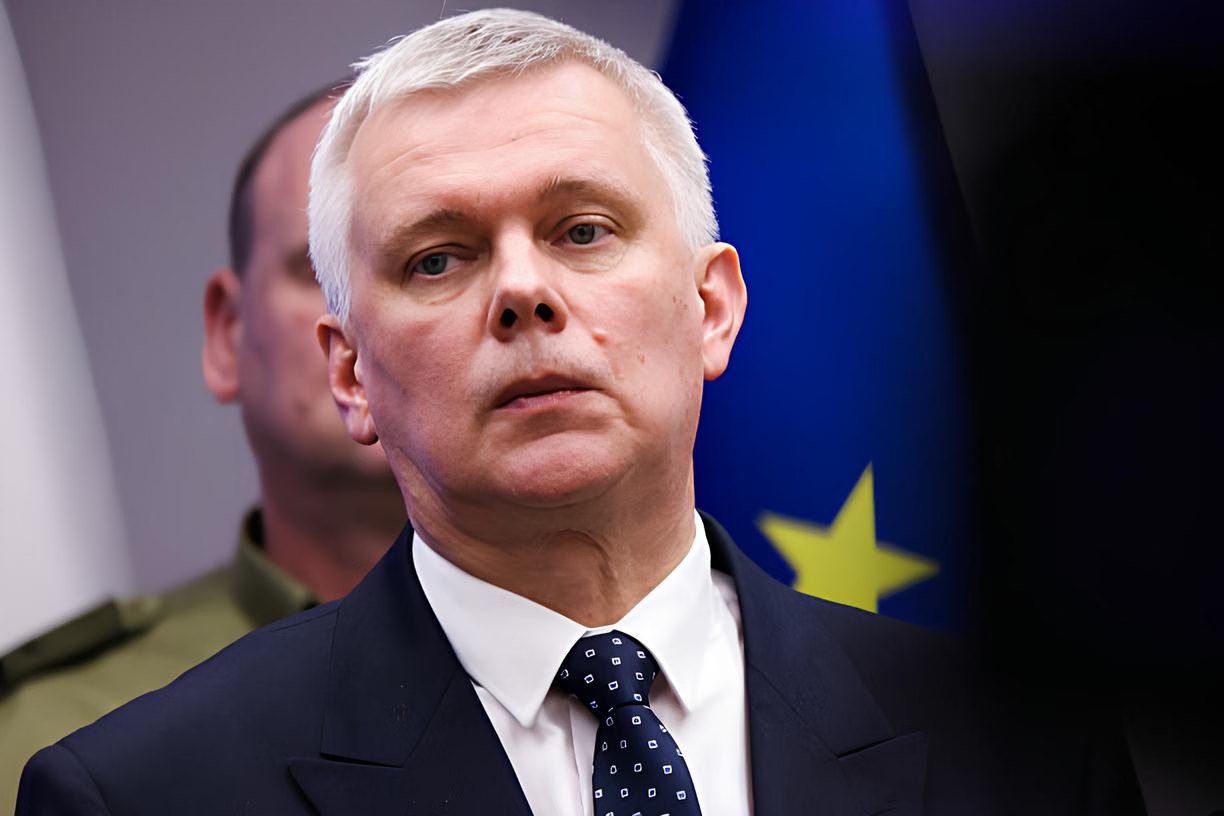
The Internal Security Agency of Poland has detained three teenagers suspected of preparing a terrorist attack, Reuters reported on November 16, citing Tomasz Siemoniak, the minister responsible for coordinating the country’s special services. Two of the suspects were 17 years old and one was 16, and they allegedly had ties to an international neo-Nazi movement.
Reuters reported that the investigators examined messages the two older teenagers exchanged on internet messaging applications. The authorities said the conversations referred to homemade explosives, improvised firearms and pyrotechnic materials allegedly intended for an attack. Police found chemical substances that could be used to make explosives during a search of premises used by one suspect.
A court ordered the two 17-year-olds to be held in pretrial detention and the 16-year-old was sent to a juvenile detention facility. The investigation is continuing and prosecutors are trying to find other people who might have been involved, the Regional Prosecutor’s Office in Gdańsk informed. It is not yet known how far the alleged plans had gone. The teens have not been convicted, and the allegations will have to go through the legal process.
The arrests come amid broader concern about extremist violence and youth radicalisation in Europe. Reuters also reported that the detentions followed a deadly shooting in Krakow earlier in November, in which six people were killed in the city’s main square. The Polish government said the gunman may have been inspired by far-right ideology, a suggestion rejected by the nationalist opposition. The ideological link, as reported, is still contested.
According to the Europol’s EU Terrorism Situation and Trend Report 2026, which covers the year 2025, 45 terrorist attacks were carried out in 10 EU member states. The agency designated 22 as completed, three as failed, and 20 as foiled. It also reported 486 arrests for terrorism-related offenses in 21 EU member states. Europol highlighted the increasing relevance of online environments to disseminate extremist propaganda and the involvement of minors in terrorism cases.

Security agencies have also become on alert because of recent incidents in other parts of Europe. An explosive device detonated outside a synagogue in Liège, Belgium, on March 9, with no known casualties, the International Center for Counter-Terrorism said. An explosion damaged a Jewish school in Amsterdam, the Netherlands, on March 14, Reuters reported. No one was injured in the incident. Dutch authorities also looked into a fire at a synagogue in Rotterdam on March 13.
In March, four ambulances belonging to the Jewish volunteer emergency service Hatzola Northwest were set on fire in Golders Green, London. The Metropolitan Police were treating the incident as an antisemitic hate crime and had involved counterterrorism officers, but it had not been formally classified as terrorism, according to the Associated Press (AP). The circumstances of these incidents are different and should not be automatically connected.
Poland’s latest case highlights the difficulty of identifying threats before violence occurs. Across Europe, investigators are looking at online networks, extremist propaganda, and the possible involvement of young people. But authorities have to draw a line between disturbing online behavior, credible preparations for violence and criminal activity.