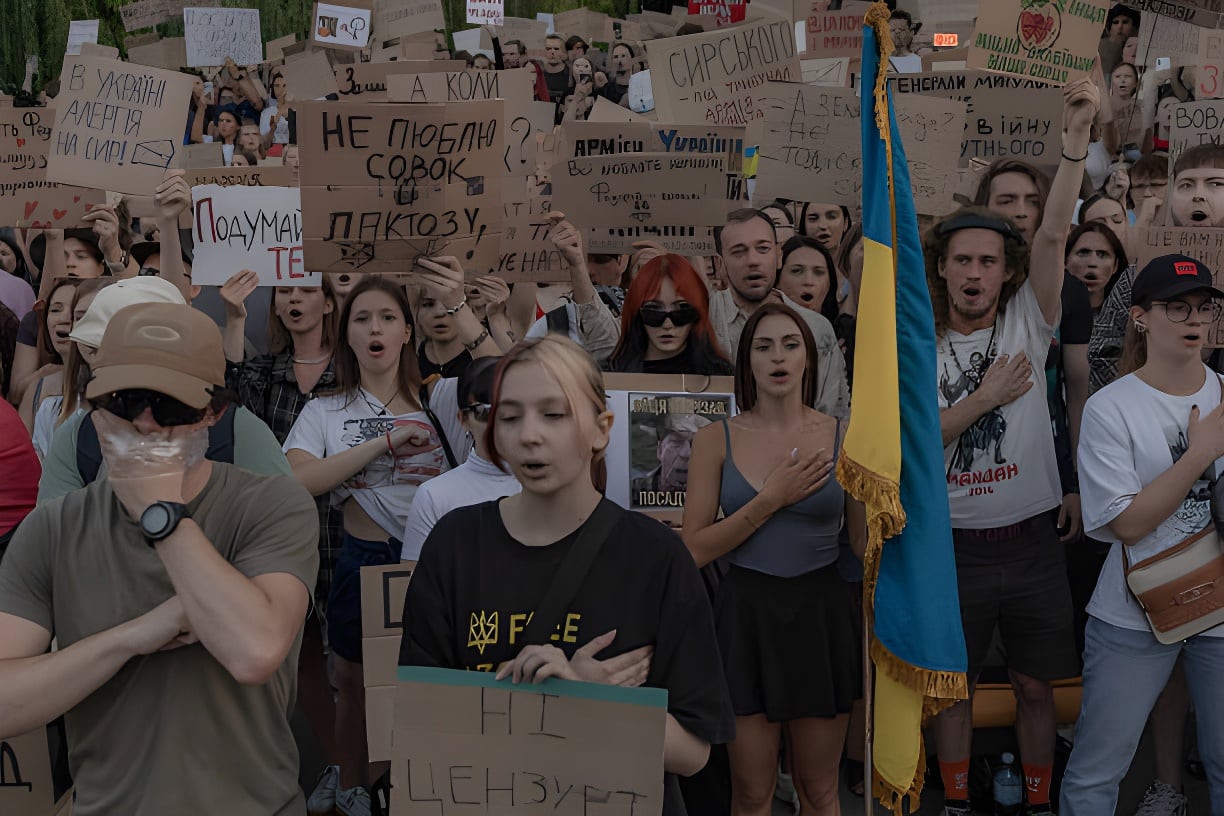
President Volodymyr Zelenskyy’s decision to fire Defense Minister Mykhailo Fedorov has sparked one of the biggest public disputes in Ukraine since the full-scale invasion by Russia, revealing tensions within the country’s wartime leadership and prompting rare protests in several cities.
Thousands gathered in Kyiv and other cities after the announcement, with many protesters calling for Fedorov to return. Many credited him with being a reformer, improving Ukraine’s drone warfare and digital military systems, and pushing anti-corruption measures in the defense sector. Critics of the decision say that removing him at a crucial juncture in the war threatens to derail progress.
Mr. Zelenskyy’s decision to sack the defense minister has quickly become a bigger political headache for a president whose leadership has generally enjoyed solid public support during the conflict. The controversy reveals a growing divide between those pushing for rapid technological modernization and military leaders that prefer more traditional strategies, analysts say.
Zelensky defended the decision, saying that relations between Fedorov and Commander-in-Chief Oleksandr Syrskyi had broken down and effective cooperation was not possible. He underlined the necessity of unity in the Ukrainian leadership, even if it meant making difficult choices among different visions for the army.
Fedorov’s exit caught many Ukrainians by surprise. The 35-year-old was the minister for digital transformation before taking on the defense minister role earlier this year, overseeing the development of the Diia platform and the expansion of Ukraine’s digital infrastructure. He also helped clinch Starlink connectivity and push drone technology that’s now at the heart of Ukraine’s battlefield strategy.
Also Read: Trump Reverses ICE Traffic Stop Suspension After Fierce MAGA Backlash
Fedorov’s six months as defense minister were aimed at modernizing procurement, cutting bureaucracy, and improving transparency. Supporters say the efforts improved Ukraine’s military capabilities and responsiveness. But critics pointed to unresolved questions about troop mobilization and recruitment.
Public frustration intensified as reports indicated that the rift between Fedorov and Syrskyi revolved around the future direction of Ukraine’s armed forces. The dispute has come to symbolize a broader divide between a younger, innovation-focused vision and a more traditional military command approach. However, Zelensky’s reported consideration of removing Syrskyi emerged only after demonstrations over Fedorov’s dismissal expanded on Friday night into a wider protest movement targeting the commander-in-chief.
Protesters outside the presidential office described Fedorov as one of the few officials delivering tangible results during wartime. Some warned that his removal could affect morale as Ukraine continues to face ongoing Russian attacks. Others questioned why the commander-in-chief remained in place while the reform-focused minister was dismissed.
In an effort to stabilize the situation, Zelensky nominated Maj. Gen. Yevhen Khmara as interim head of the Defense Minister. Ukrainian law requires him to leave active military service before Parliament can approve the appointment.
Observers say the protests are unusual during wartime, highlighting the challenges Zelensky faces in balancing unity with competing priorities. Whether the unrest grows or subsides may depend on how quickly confidence is restored among both civilians and the armed forces.